
How to Check Criminal History in Potter County
No single Potter County screen combines every criminal record. Start with the free Unified Judicial System search when the goal is to understand a filed case. Search by participant name with Potter selected as the county, then inspect both Magisterial District Court and Court of Common Pleas results. A recent incident may not have reached the docket yet. In that situation, call the agency that made the arrest and Potter County Jail. Use PATCH when an official Pennsylvania repository response is needed, not as a substitute for the court file.
Gather a full legal name, prior names, a date of birth when lawfully available, and any known incident, complaint, OTN, or docket number. A name match is only a lead. Compare the county, court, dates, charges, and identifiers before treating two entries as the same matter. The strongest check of your own record pairs the PSP Individual Access and Review response with UJS dockets and the underlying local documents.
- Search UJS by participant name, select Potter County, and begin with few filters.
- Open each likely docket and compare identifiers, filing dates, court level, and case status.
- Ask Clerk of Courts Room 23 for complaints, informations, orders, sentences, or certified copies that the public docket only lists.
- Call the arresting agency and county jail when an arrest or booking is too new for a filed court record.
- Use PATCH or the subject-only Access and Review process when a Pennsylvania repository product is the proper record.
Note: A blank online result can reflect sealing, limited access, timing, retention rules, or a search mismatch rather than a clean record.
Potter County UJS Record Search
The UJS Case Search is the main public index for Potter County court records. It includes the 55th Judicial District's Common Pleas criminal dockets and records from the county's three Magisterial District Courts. The portal advises searchers to start with less data and narrow the results later. Participant name works when no case number is known, while OTN, SID, complaint, incident, and docket numbers can tie a search to a more exact event.
The official case-information overview distinguishes free public docket access from secure reports available to authorized users. Public entries show the procedural record, but they do not turn every filing into a downloadable PDF. That gap is why a Potter County record search often ends with the local clerk.
| Search field | Best use | Potter County note |
|---|---|---|
| Participant Name | Start without a docket number | Use first name, last name, and Potter County first |
| Docket Number | Open a known court file | Match the MDJ or Common Pleas docket type |
| OTN or SID | Trace an identified record | Useful when names or spellings overlap |
| Incident or Complaint | Connect police and court references | Availability depends on what was entered |
| Judicial District | Narrow statewide results | Select Potter, Judicial District 55 |
The official Potter County homepage provides the local courthouse and department route that complements the statewide docket search.
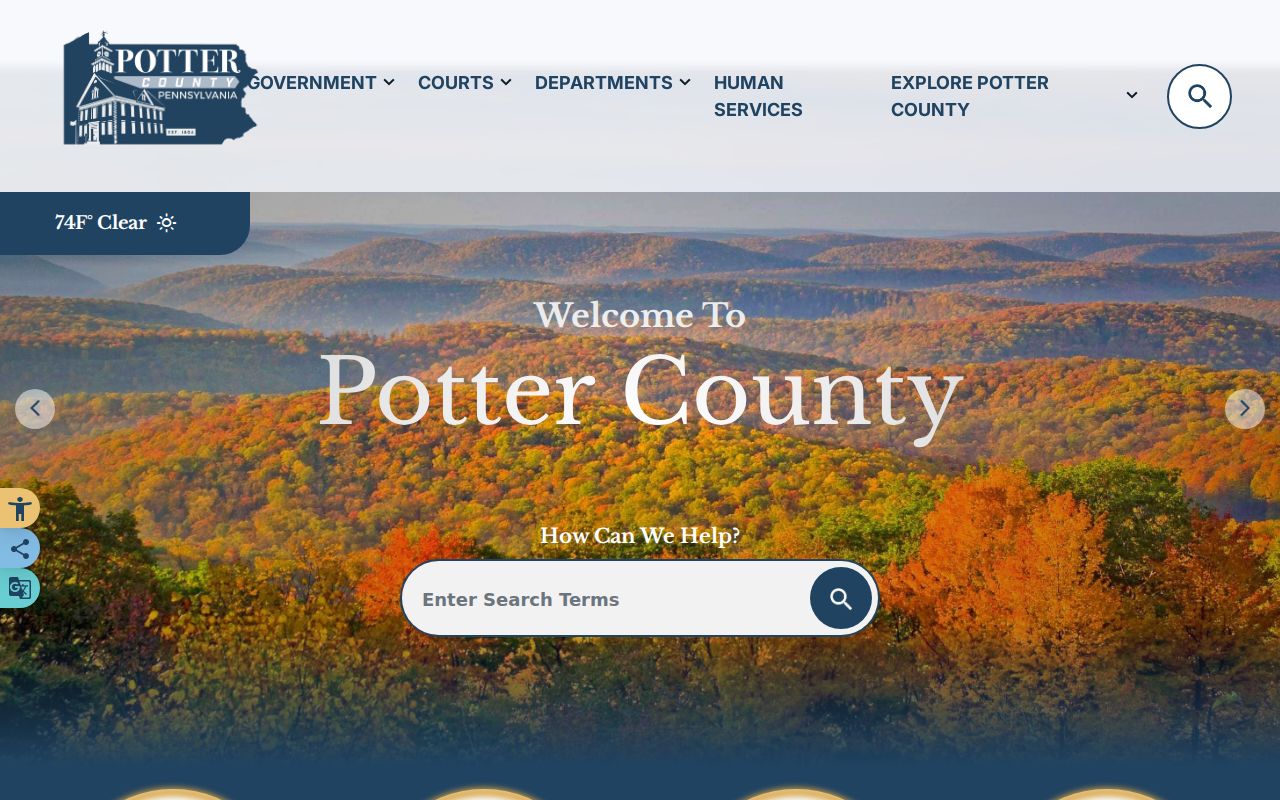
That county entry point helps confirm local office details before a searcher moves from a docket to a paper filing.
Official Pennsylvania Background Checks
The Pennsylvania State Police Criminal Records and Identification Division maintains the Central Repository. Its Pennsylvania Access To Criminal History system, known as PATCH, provides a standard Pennsylvania name-based criminal-history check for $22. The product covers repository information reported within Pennsylvania. It is not an FBI check, a Potter County filing packet, or a real-time county jail roster. A notarized mail check costs $27, while the statutory volunteer product is free.
A person seeking the full Pennsylvania record about themself, including non-conviction information, uses the mail-only Individual Access and Review process for $20. A program that lawfully requires a Commonwealth-authorized FBI check uses IDEMIA/IdentoGO digital fingerprinting with the correct service code. No fixed Potter County enrollment site was verified, so confirm the current location during registration. Personal federal self-review instead runs through the FBI Identity History Summary process.
| Official product | Channel | Fee | Scope |
|---|---|---|---|
| Public PA history check | PATCH or SP4-164 mail | $22 | Pennsylvania PSP repository data |
| Notarized check | $27 | Standard response with notarization | |
| Volunteer check | PATCH or SP4-164A | $0 | Statutory volunteer product |
| Individual Access and Review | SP4-170 mail | $20 | Requester's complete PA record |
| FBI Identity History | FBI EDO and fingerprints | Current FBI fee | Requester's federal identity history |
Note: PATCH covers Pennsylvania repository data, while an FBI Identity History Summary is a separate fingerprint-based federal self-review product.
PATCH Records in Potter County
PATCH opens through this official PSP interface, where a requester enters the subject identifiers needed for a name-based check.
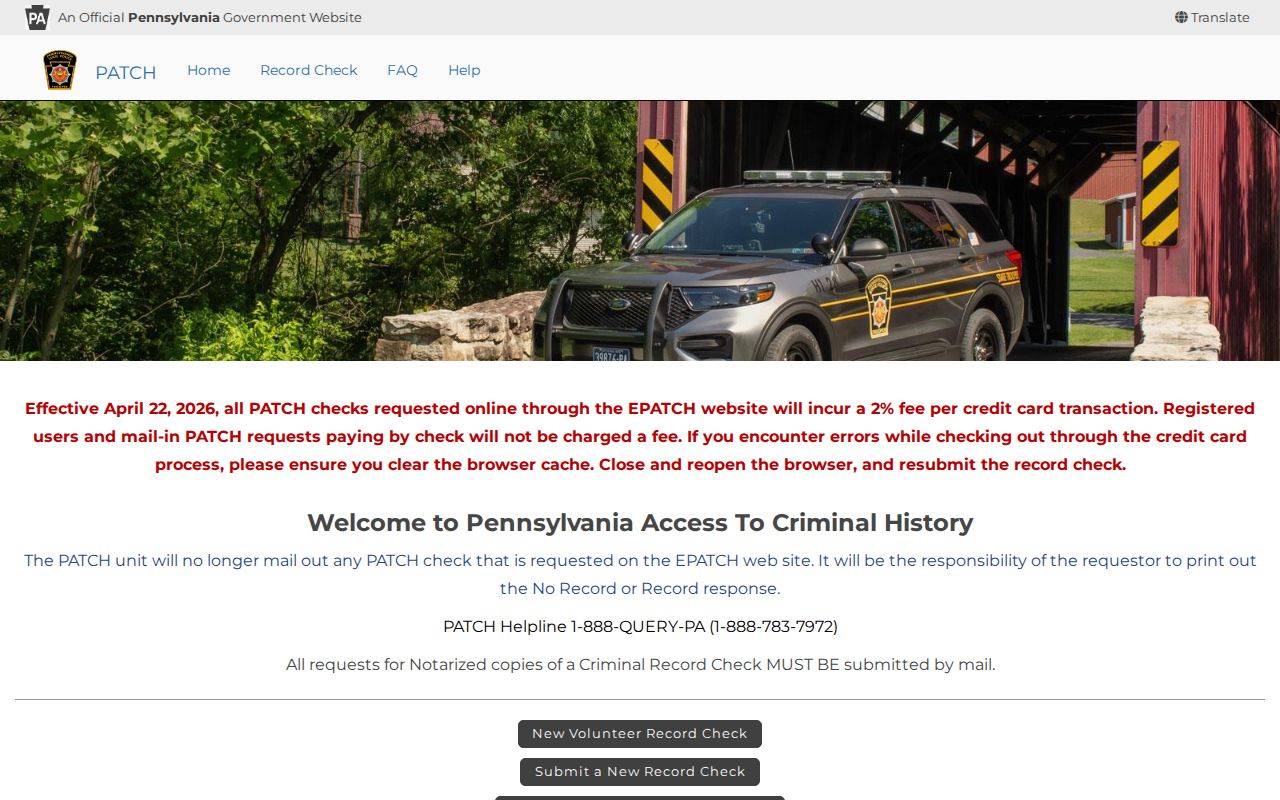
The screen leads to a repository request, not a search of the Potter County Clerk's scanned case documents.
PATCH can return No Record, Request Under Review, or a completed Record result. “Request Under Review” means an identifier match needs manual work. It is not proof that the subject has a criminal record. Many no-match requests return quickly, while a review may take two to four weeks. Keep the control number, the subject name exactly as entered, and the request date because the status screen uses all three.
Compare a completed repository result with the relevant Potter County docket. Arrest charges can change, and a court may dispose of separate counts in different ways. The repository and docket answer related but distinct questions. For help, PSP lists 1-888-QUERYPA from 8 a.m. to 4 p.m. on weekdays.
Types of Criminal Records
Potter County criminal history is a chain of records, not one file. PSP or a borough police department writes an incident or arrest report. Potter County Jail creates a booking record only when it receives a person into custody. A Magisterial District Judge records the complaint, preliminary arraignment, bail, warrant, and preliminary hearing. If charges continue, the Clerk of Courts keeps the Common Pleas case file.
- Police reports describe the reported event, officer response, and alleged conduct, subject to investigative limits.
- Booking records document intake, received charges, bond, and custody status without proving guilt.
- Court dockets track charges, events, bail, pleas, dispositions, and sentences at the MDJ or Common Pleas level.
- Repository records connect fingerprint-supported arrest cycles with later outcomes reported to PSP.
- Warrant and supervision records sit with courts, the Sheriff, probation, or state corrections according to the event.
The record owner matters. The Sheriff executes court orders and transports prisoners, but PSP and borough police usually own their arrest reports. The court issues a warrant, while the Sheriff's office may handle its execution. Sending a broad request to the wrong office can delay the answer.
Potter County Criminal Record Custodians
Potter County concentrates several offices in Coudersport, yet each keeps a separate part of the criminal record. Physical closeness does not merge the files. The Clerk's counter is in the historic courthouse, the Sheriff is next door in Room 24, the jail is on East Second Street, and PSP Coudersport is farther east. Borough police in Coudersport, Shinglehouse, and Galeton retain their own agency reports.
Clerk of Courts
1 East Second Street, Room 23
Coudersport, PA 16915
814-274-9740
Weekdays 8:30 a.m. to 4:30 p.m.; closed noon to 1 p.m.
Potter County Sheriff
1 East Second Street, Room 24
Coudersport, PA 16915
814-274-9350
Court orders, security, transport, and warrant guidance
Potter County Jail
102 East Second Street
Coudersport, PA 16915
814-274-9730
Current county custody and booking requests
PSP Coudersport
3084 East Second Street
Coudersport, PA 16915
814-274-8690
PSP incident records and local state-police coverage
The official Potter County Sheriff page supplies these local office details.
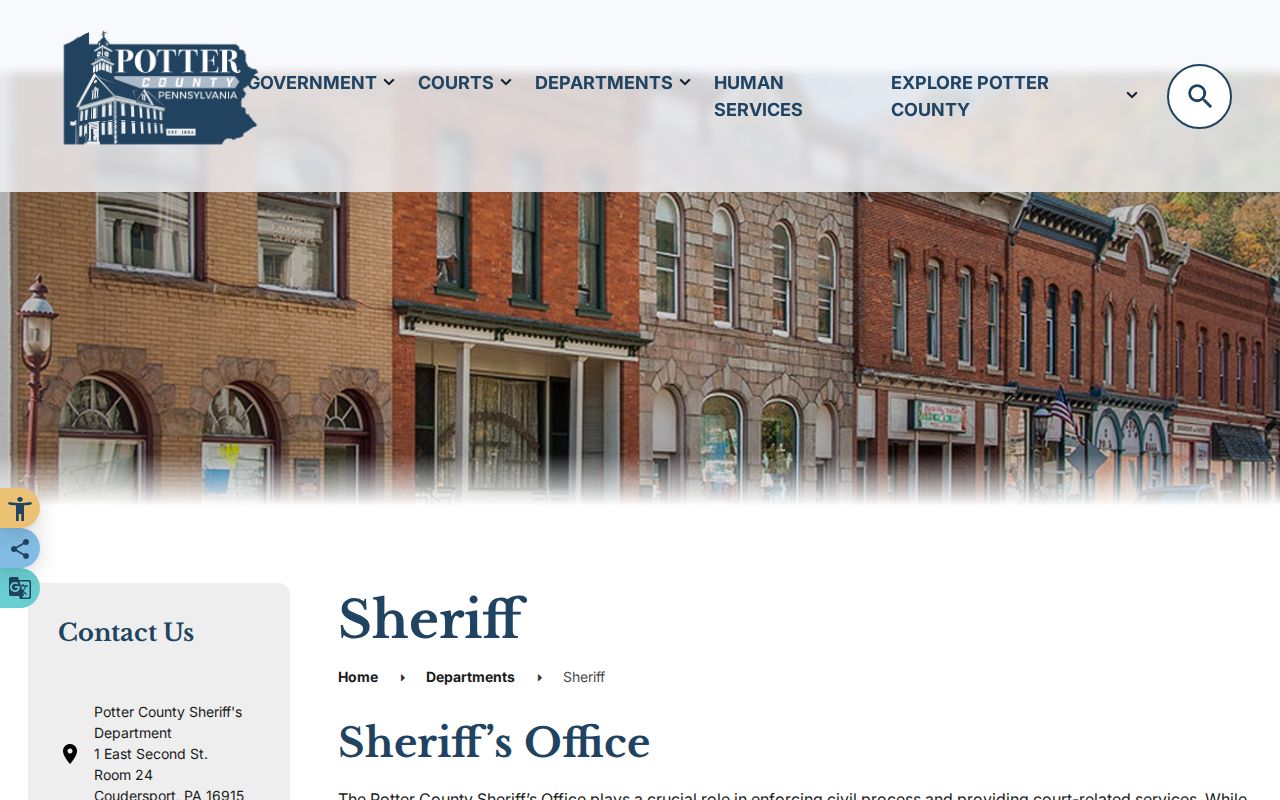
The office's stated duties also explain why it is not a countywide substitute for police incident records.
What a Potter County Criminal Record Shows
The contents change with the custodian. A PSP rap sheet groups identity and arrest cycles around repository identifiers. A court docket organizes one prosecution. A jail record is a custody snapshot. Reading the source label first keeps a booking allegation from being mistaken for the final court outcome.
| Name and identifiers | Legal name, aliases, date of birth, OTN, SID, or docket number where public and applicable |
|---|---|
| Arrest and booking | Agency, date, received charges, intake time, bond, and release or transfer status when released |
| Charges and statutes | Separate counts, Pennsylvania statute citations, offense descriptions, and grades such as F1 or M2 |
| Disposition | The result for each count, including conviction, dismissal, acquittal, withdrawal, or nolle prosequi |
| Sentence | Confinement, probation, fines, costs, restitution, and concurrent or consecutive terms entered by the court |
| Custody or supervision | County detention, state institution, local probation, or state parole status from the proper office |
A Potter County docket can show several outcomes in one case. Read every count. “Disposition” means the recorded result, while an OTN is the Offense Tracking Number that links an episode across systems. Pennsylvania grades most crimes by degree, so F1 means first-degree felony and M2 means second-degree misdemeanor. The grade states the legal level, not whether guilt was found.
Note: A booking charge, filed charge, and final disposition can differ because prosecutors and courts may amend or resolve individual counts.
Potter County Jail Record Limits
Potter County publishes no verified public jail roster, name-search page, daily booking log, or mugshot gallery. For current county detention, call the jail at 814-274-9730 or ask at the lobby after confirming procedure. A UJS docket may show bail and filed charges, but it does not prove current custody and may lag a new booking. A focused Right-to-Know request can seek an identified administrative or booking record, subject to exemptions and redaction.
The official Potter County Jail page documents the local custody contact and facility rules. That county source is the safe starting point when an unofficial roster claims to show Potter County bookings.
State custody uses a different system. The Pennsylvania DOC Inmate/Parolee Locator covers state-sentenced people and DOC-supervised parolees, not people held at Potter County Jail. It can search by last name or inmate number and updates daily. Pennsylvania SAVIN offers free custody-event alerts, but it remains a notification tool rather than the official case file.
The state locator interface helps separate Potter County custody from Pennsylvania prison and parole records.
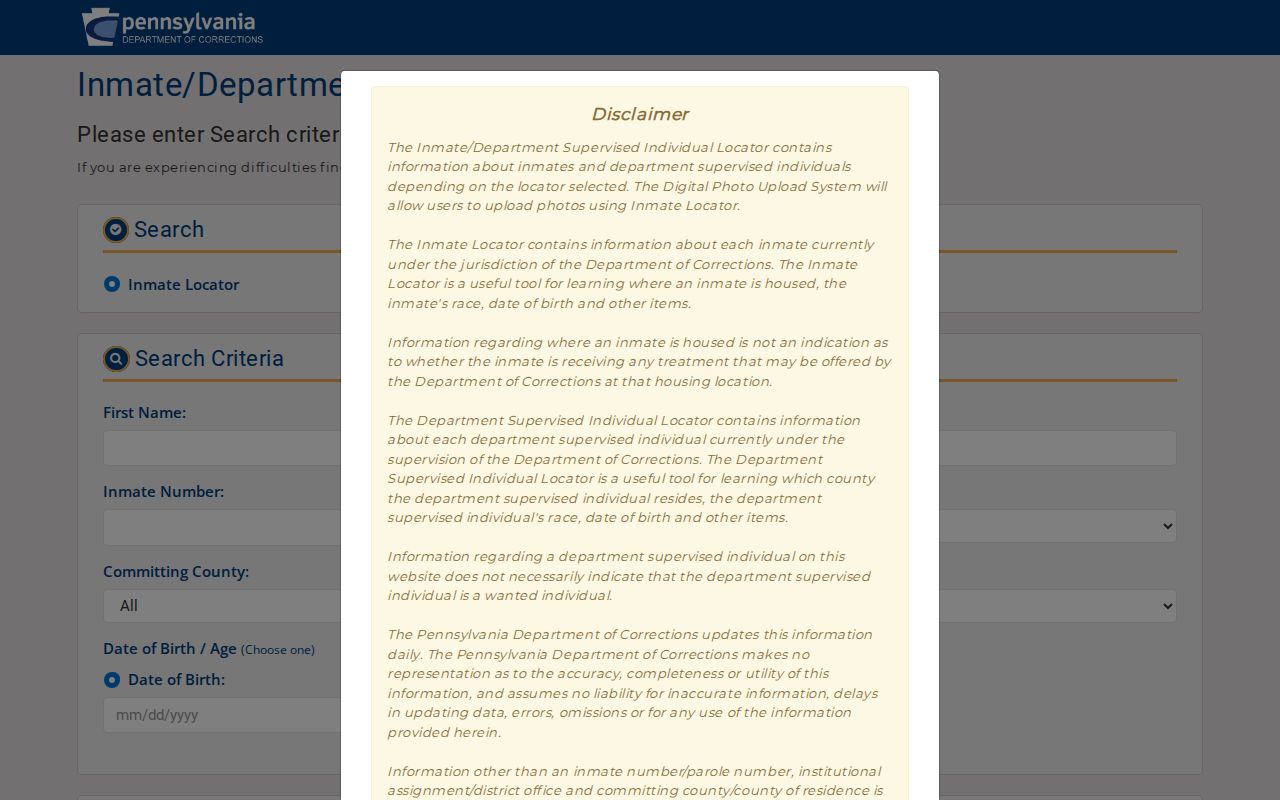
Searchers should choose the county jail phone for local detention and this locator only after custody moves into the state system.
Potter County Warrant Record Checks
No verified public Potter County active-warrant database or most-wanted page is available. The UJS Statewide Warrants service is for approved secure users, not the public. A public docket can hint that a bench warrant was issued or cleared, yet absence from the docket is not confirmation that no warrant exists. Contact the issuing MDJ for preliminary, traffic, or summary matters, Clerk Room 23 for Common Pleas records, and the Sheriff for execution or status guidance.
A bench warrant often concerns failure to appear or comply. An arrest warrant begins a prosecution, while a search warrant authorizes a search. Those records do not carry the same access rules. Sealed, juvenile, and active investigative material may remain unavailable. If the possible warrant is your own, call the issuing court or counsel for instructions before appearing. Ask how to handle appearance, bail, payment, and documents, then recheck the docket after resolution.
Note: A third-party warrant page cannot replace direct confirmation from the Potter County court that issued the judicial order.
Public Access Laws
Pennsylvania law separates public court access, repository dissemination, and police investigative material. The Right-to-Know Law creates a request process, but it does not erase criminal-investigation exemptions. CHRIA governs the collection and release of state criminal-history information. UJS policy permits free public electronic dockets while protecting specified data and case categories. Registry statutes authorize a defined public profile and also warn against misuse.
Key Pennsylvania authorities:
Pennsylvania Right-to-Know Law sets the request and appeal process, subject to exemptions.
18 Pa.C.S. Chapter 91 governs criminal-history record collection, maintenance, and dissemination.
18 Pa.C.S. § 9122 states the core Pennsylvania expungement routes and notice rules.
UJS Public Access Policy provides free docket viewing while excluding protected information.
42 Pa.C.S. § 9799.32 authorizes the public registry within its statutory limits.
Public does not mean complete. Victim details, Social Security numbers, medical information, juvenile material, and investigative content can be withheld or redacted. Ask the office that created the record and describe the document precisely.
Potter County Record Request Fallback
The county's Standard Right-to-Know Request Form is the main written fallback when no public Potter County database exists. Describe a record instead of asking the office to answer a question. Include the agency, document type, incident or date range, known report or case number, and the desired delivery format. The form accepts requester contact data, a clear description, and delivery choices. A focused request is easier to route and review.
Potter County's official open-records instructions identify the current request route.
The county page should be checked on filing day because the Open Records Officer's contact and submission details can change.
An agency normally has five business days for its initial response. A lawful extension may add up to 30 calendar days, and an appeal generally must reach the Office of Open Records within 15 business days after a denial or deemed denial. Submission is free. Electronic delivery often brings no duplication charge, while paper copies, certification, conversion, special media, and postage may cost the amounts allowed by the official fee schedule.
PSP-created reports go through the PSP Right-to-Know channel, not the county officer. Court filings go to the clerk. RTKL is not an emergency warrant or custody check, so call the jail, court, or Sheriff when time matters.
Note: Submission is free, but allowed copy, certification, conversion, media, and postage costs can still apply to a fulfilled request.
Sealed, Expunged & Restricted
Juvenile matters, sealed records, qualifying limited-access cases, and expunged or pending-expungement dockets may not appear in public UJS results. Clean Slate limited access suppresses ordinary public dissemination but does not destroy the file. Expungement under 18 Pa.C.S. § 9122 is a distinct statutory process. Possible routes include specified non-convictions, complete acquittals, unconditional pardons, qualifying underage-alcohol matters, and certain repository entries with no disposition after the statutory period.
Relief depends on the exact charge, disposition, waiting period, and current statute. A Potter County filing starts by collecting the PSP Access and Review record and full dockets, identifying each charge result, and deciding whether the requested relief is expungement, limited access, or a pardon route. File the proper petition through Clerk Room 23, meet notice and hearing rules, keep certified orders, and later verify both UJS suppression and PSP correction. Check the current county fee schedule because the research did not confirm a fixed criminal expungement filing fee.
Correcting Potter County Criminal Records
Start a self-correction with the source that holds the disputed fact. A wrong court event or disposition belongs with the Potter County clerk and the court that entered it. A repository mismatch belongs in the PSP review process. A booking detail comes from the jail, while an incident-report point remains with the police agency. Sending one broad correction demand to every office can blur those lines.
Use the OTN, docket number, agency report number, and certified order to connect the records. Compare charge sequence and disposition date count by count. If a case is sealed or expunged, keep the signed order and verify the change in both the UJS public view and the PSP response after enough processing time. A missing search result alone cannot show that each downstream system has been corrected.
Criminal Records by City in Potter County
Potter County has no incorporated municipality legally called a city, so these local guides follow the three largest boroughs in the official 2020 ranking. Each borough police department holds its own incident records, and each local Magisterial District Court keeps its first-level case papers. County jail, Common Pleas, UJS, and PSP channels then add separate layers.
Coudersport Criminal History
Population 2,381. Borough police, MDJ 55-3-01, county jail, and Common Pleas records meet in the county seat.
Shinglehouse Criminal History
Population 1,103. Borough reports and MDJ 55-4-01 records require direct local contact when no portal exists.
Galeton Criminal History
Population 990. Galeton police records and MDJ 55-4-03 papers stay distinct from county custody files.
The borough list helps a searcher identify the correct police department before moving to county or state criminal records.
Potter County Supervision Records
Potter County Adult Probation supervises county probation and county-parole matters from Suite 229 at One North Main Street. The First Street side Door J is the posted entrance. A public sentencing docket may show probation, but treatment notes, officer reports, and other sensitive supervision details are not automatically public. For state parole after Pennsylvania prison, use the Department of Corrections locator and state parole channels instead.
The county probation page documents Potter County's local office and programs.
The local office page makes clear why a county probation term may not appear in the Pennsylvania DOC locator.
Recent Jail Board records add context without becoming individual criminal files. Potter County has discussed the Re-entry Coalition, Stepping Up planning, medication-assisted treatment, telepsychiatry, assessment, and recovery support. Those programs explain parts of the local supervision system, but they do not make confidential treatment or case-management notes public. Confirm the sentence on the docket, then ask the right supervising authority what it can lawfully disclose.